How to Use a Calorie Calculator for Effective Weight Management

In the quest for better health and fitness, understanding your daily calorie intake is crucial. A calorie calculator is an essential tool that helps you determine the number of calories you need to consume daily to maintain, lose, or gain weight. By accurately calculating your caloric needs, you can make informed decisions about your diet and achieve your fitness goals more efficiently. In this article, we will explore how to use a calorie calculator effectively, discuss its benefits, and provide tips for managing your daily calorie intake.
What is a Calorie Calculator?
A calorie calculator is an online tool or app that estimates the number of calories you need to consume daily based on various factors such as age, gender, weight, height, and activity level. It uses established formulas, like the Harris-Benedict equation or the Mifflin-St Jeor equation, to calculate your Basal Metabolic Rate (BMR) and Total Daily Energy Expenditure (TDEE).
Why Use a Calorie Calculator?
- Personalized Nutrition
A calorie calculator provides a personalized estimate of your caloric needs, taking into account your specific details and lifestyle. This personalized approach is more effective than generic diet plans. - Weight Management
Whether your goal is to lose, gain, or maintain weight, knowing your daily calorie requirements helps you create a tailored nutrition plan. You can adjust your calorie intake to align with your weight management goals. - Improved Health and Fitness
Tracking your calorie intake ensures you get the right amount of energy from your diet, preventing under or overconsumption, which can lead to health issues. It also helps you make healthier food choices and balance your macronutrient intake.
How to Use a Calorie Calculator
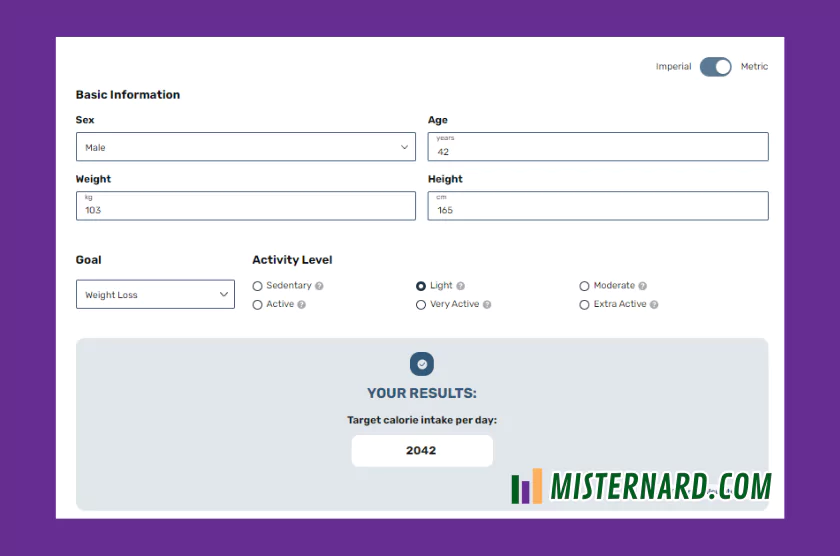
- Input Your Details
To get started with a calorie calculator, you need to input the following details:- Age
- Gender
- Weight
- Height
- Activity level (sedentary, lightly active, moderately active, very active, or extra active)
- Understand Your BMR and TDEE
Basal Metabolic Rate (BMR): This is the number of calories your body needs at rest to maintain vital functions like breathing, circulation, and cell production.
Total Daily Energy Expenditure (TDEE): This is the total number of calories you need in a day, including all physical activities. - Set Your Goal
Decide whether you want to maintain, lose, or gain weight. The calorie calculator will adjust your daily calorie target based on your goal:- Weight Maintenance: Consume the number of calories equivalent to your TDEE.
- Weight Loss: Create a calorie deficit by consuming fewer calories than your TDEE.
- Weight Gain: Create a calorie surplus by consuming more calories than your TDEE.
- Track Your Intake
Use a food diary or a nutrition tracking app to log your daily calorie intake. Compare your actual intake with your target to ensure you stay on track.
Tips for Managing Your Calorie Intake
- Plan Your Meals
Planning your meals in advance helps you control portion sizes and avoid impulsive eating. It also ensures that you consume a balanced diet with the right mix of macronutrients. - Choose Nutrient-Dense Foods
Focus on eating foods that are rich in nutrients but low in calories, such as fruits, vegetables, lean proteins, and whole grains. These foods provide essential vitamins and minerals without adding excess calories. - Monitor Portion Sizes
Be mindful of portion sizes to avoid overeating. Use measuring cups or a kitchen scale to accurately measure your food portions. - Stay Hydrated
Drinking water can help you feel full and reduce your overall calorie intake. Aim to drink at least eight glasses of water a day. - Be Active
Incorporate physical activity into your daily routine to increase your TDEE and support your weight management goals. Aim for at least 150 minutes of moderate-intensity exercise per week.
Common Challenges and Solutions
- Inaccurate Calorie Counting
It’s easy to underestimate the number of calories in certain foods, especially when dining out. Solution: Use a reliable nutrition tracking app and double-check the calorie content of foods you’re unfamiliar with. - Lack of Motivation
Sticking to a calorie-controlled diet can be challenging. Solution: Set realistic goals, track your progress, and reward yourself for milestones achieved. - Plateau Effect
Weight loss may slow down or plateau after a while. Solution: Reevaluate your calorie needs and adjust your intake or activity level accordingly.
Conclusion
A calorie calculator is a powerful tool that can help you achieve your weight management goals by providing personalized calorie targets based on your specific needs and lifestyle. By understanding your caloric needs and tracking your intake, you can make informed decisions about your diet and improve your overall health and fitness. Remember to plan your meals, choose nutrient-dense foods, monitor portion sizes, stay hydrated, and stay active to effectively manage your calorie intake. Start using a calorie calculator today and take the first step towards a healthier you!
If you found this article helpful, please share it with others who might benefit from understanding their daily calorie needs. Leave a comment below with your thoughts or any questions you may have, and explore our other articles for more tips on healthy living and fitness.